When someone is hungry, they don’t scroll forever—they decide fast. That’s why postcards still work for restaurants across the USA. A well-designed postcard lands directly in a customer’s home, gets seen multiple times and stays visible longer than a digital ads.
But the best postcard campaigns don’t feel “salesy.” They feel local, helpful and real. And that’s exactly how you build trust while bringing in new customers.
Below are practical postcard mailing ideas restaurants can use to attract first-time buyers, increase repeat orders and strengthen local brand credibility—without complicated marketing.
Postcards have three powerful advantages for restaurants:
1. They’re local: You can reach nearby neighborhoods where people are most likely to dine-in order delivery or pick up takeout.
2. They’re visible: Postcards don’t get buried in an inbox. They’re seen instantly.
3. They build familiarity: Even if someone doesn’t order today, your restaurant becomes recognizable and recognition builds trust.
The key is simple: make your message clear, your offer honest and your call-to-action easy.
If your goal is to attract first-time customers, a warm welcome is one of the best approaches.
Postcard concept:
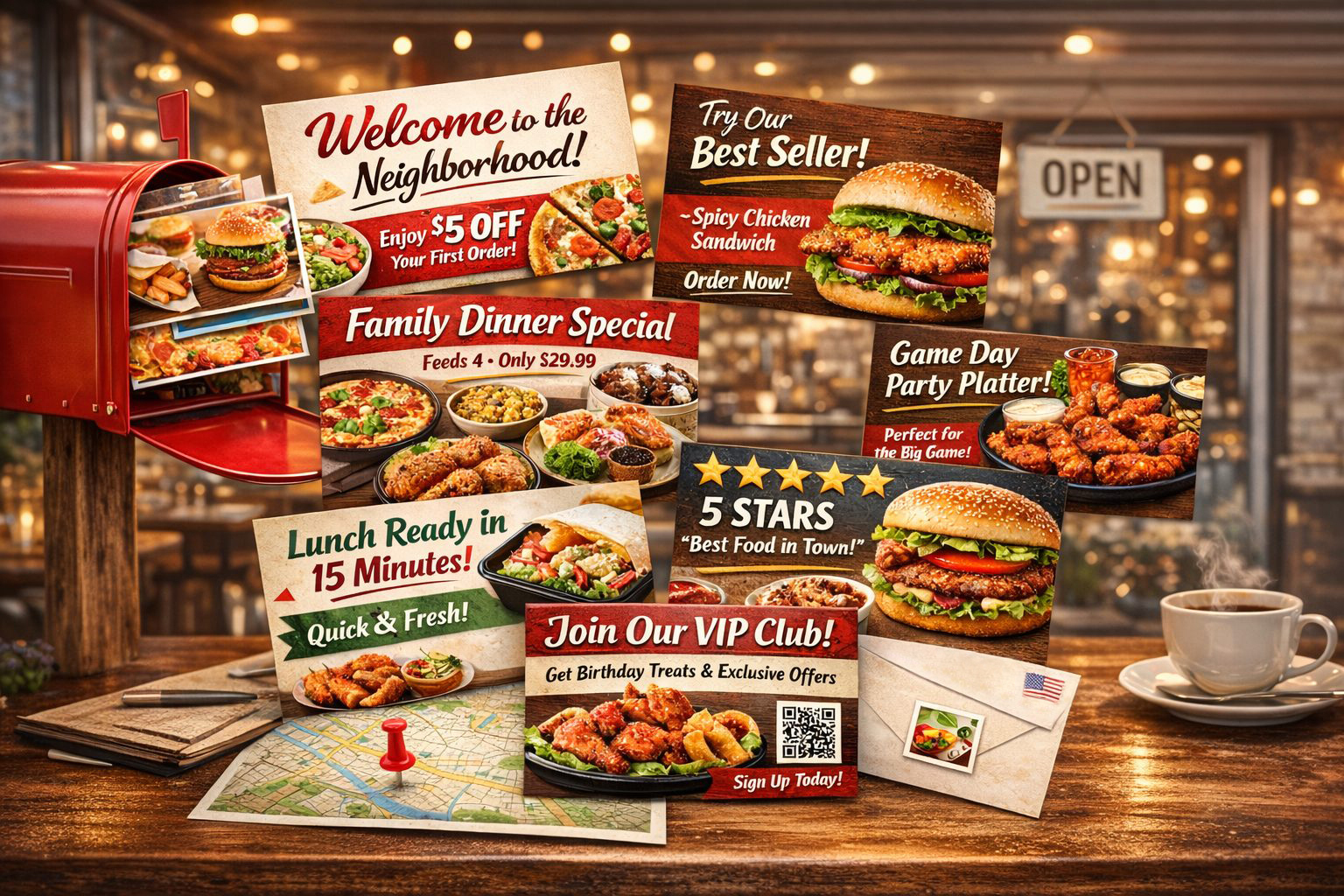
Front: “Welcome to the neighborhood!”
Back: “We’re a local favorite for fresh [cuisine type]. Enjoy $5 off your first order this week.”
Why it builds trust: It feels like a friendly introduction, not a hard pitch.
Tip: Keep the offer simple. If there’s a minimum order, state it in one clear line.
Many restaurant ads fail because they promote everything. A postcard works best when it promotes one clear hero item.
Postcard concept:
Feature one dish with a great photo and a short promise, like:
a) "Our #1 Seller: Crispy Chicken Burger"
b) "Fan Favorite: Family BBQ Platter"
Add 2–3 credibility points:
1. "Made fresh daily"
2. "Family-owned"
3. "Halal-friendly / vegetarian options" (only if true)
4. "Fast pickup available"
Why it builds trust: Confidence comes from focus. One strong recommendation beats a long menu list.
Families and groups want convenience. A bundle helps customers decide quickly and increases average order value.
Postcard concept:
“Family Dinner Deal”
a) Includes mains + sides + drinks
b) Clear price or “Starting at $X”
c) Optional add-on: dessert
Why it builds trust: Transparent bundles feel fair. People love knowing what they’re getting.
If your restaurant is near offices, schools or business districts, a lunch postcard can perform extremely well.
Postcard concept:
“Fast Lunch Near You”
“Order ahead, pick up in 10–15 minutes.”
Why it builds trust: You’re addressing the real customer concern—time.
Important: Only promise speed if you can consistently deliver it.
People trust restaurants other locals already love. Use social proof carefully and honestly.
Postcard concept:
1. One short customer review (real, with permission)
2. A rating badge (only if accurate)
3. "Locally loved in [City/Area]"
Why it builds trust: Social proof removes doubt for first-time customers.
Tip: One powerful review is better than five small quotes.
Seasonal postcards feel timely and relevant—especially for restaurants.
Ideas that work well:
1. "Game Day Wings & Party Bundles”
2. "Summer Family Combo Specials”
3. "Holiday Catering Menu”
4. "Back-to-School Quick Meals”
Why it builds trust: You’re showing you understand what’s happening in your customer’s life right now.
Not every postcard needs a discount. Loyalty-style postcards build long-term trust and repeat business.
Postcard concept:
“Join our VIP list for birthday treats + exclusive specials.”
Include a QR code to a simple signup page.
Why it builds trust: It feels like a relationship, not a one-time transaction.
If a postcard looks messy, people assume the restaurant is messy. Keep it clean and credible:
1. Use one main headline (no clutter)
2. Use real food photos (avoid generic stock images)
3. Add location credibility: address + hours + phone
4. Use a clear CTA: “Order Online” / “Call Now” / “Scan to View Menu”
5. Make your offer easy to understand in 5 seconds
Best practice: Include both a QR code and a short website link—some people prefer typing.
Even nationwide restaurant brands target locally. For independent restaurants, it’s even more important.
Start with:
a) 1–5 mile radius around your restaurant (based on delivery range)
b) Neighborhoods with families, apartments and working professionals
c) One zone at a time, then expand based on results
This approach keeps your budget efficient and your results measurable.
To avoid guessing, track your campaign:
a) Use a simple promo code (example: TASTE5)
b) Use a unique QR code to a special page
c) Train staff to ask: “Is this your first time with us?”
Even basic tracking will show you which postcard idea brings the best customers.
Restaurant postcards work when they feel local, honest and helpful. Focus on one offer, one message and one clear action—then mail it consistently to the neighborhoods most likely to order.
Trust grows through familiarity and postcards create that familiarity faster than most digital ads.